Problem
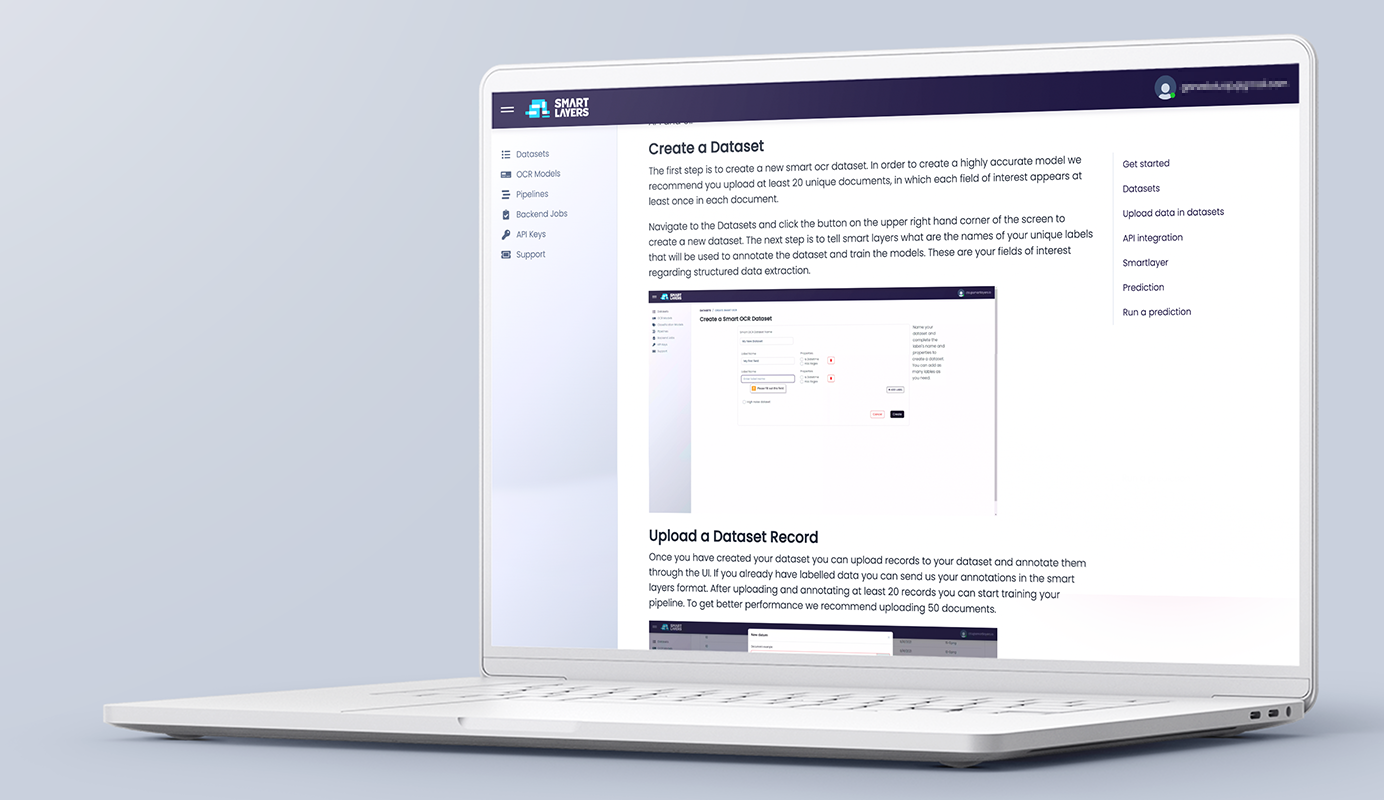
The platform was technically powerful but conceptually abstract. Users needed to upload samples, annotate document zones, train models, run pipelines, and interpret predictions — all within a machine learning workflow that could take minutes or hours to process.
Outputs included extremely large labels and encrypted hash keys with no semantic meaning. Without structure, the experience risked feeling like a black box.
The challenge was clear: how do we make machine learning feel structured, controllable, and usable — not opaque and overwhelming?
The plan & design
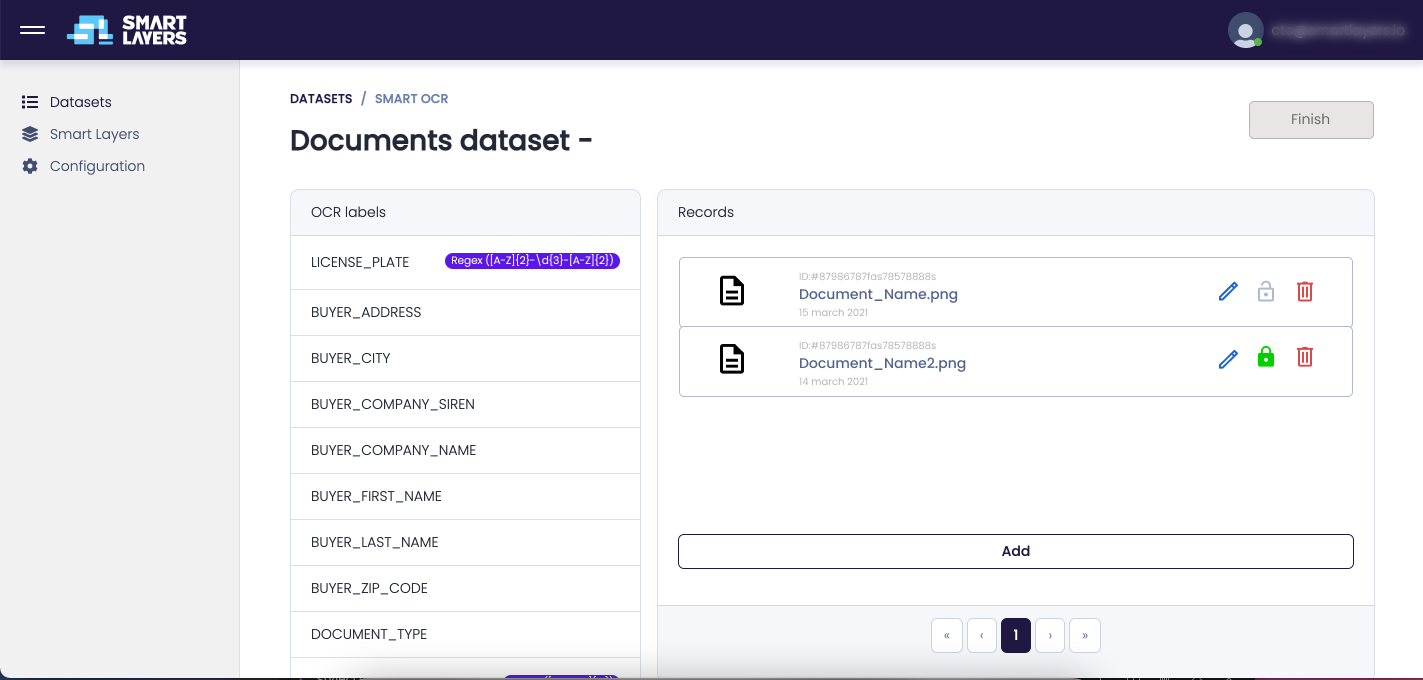
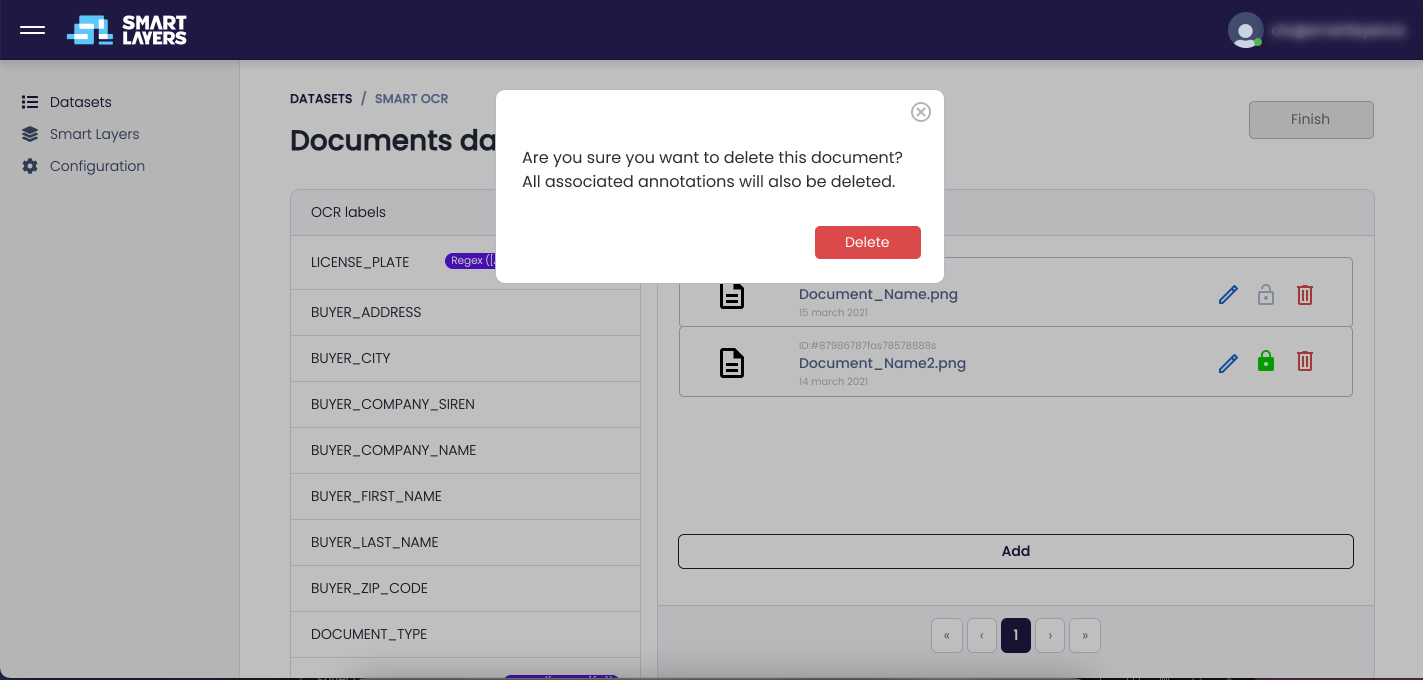
I structured the entire machine learning lifecycle into clear, sequential stages: sample management, annotation, model training, pipeline execution, and prediction validation. The interface followed this logic, giving users a mental model of what was happening at every step.
To reduce cognitive noise, I redesigned the way encrypted prediction hashes were displayed. Instead of showing full-length keys, I truncated them visually and added a copy-to-clipboard action. This preserved technical integrity while keeping the UI readable.
For the SL Annotator, I designed an interaction inspired by familiar graphic tools. Users could draw polygons directly on documents to define training zones, making the experience intuitive despite the complexity behind it.
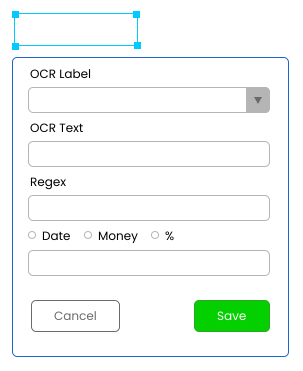
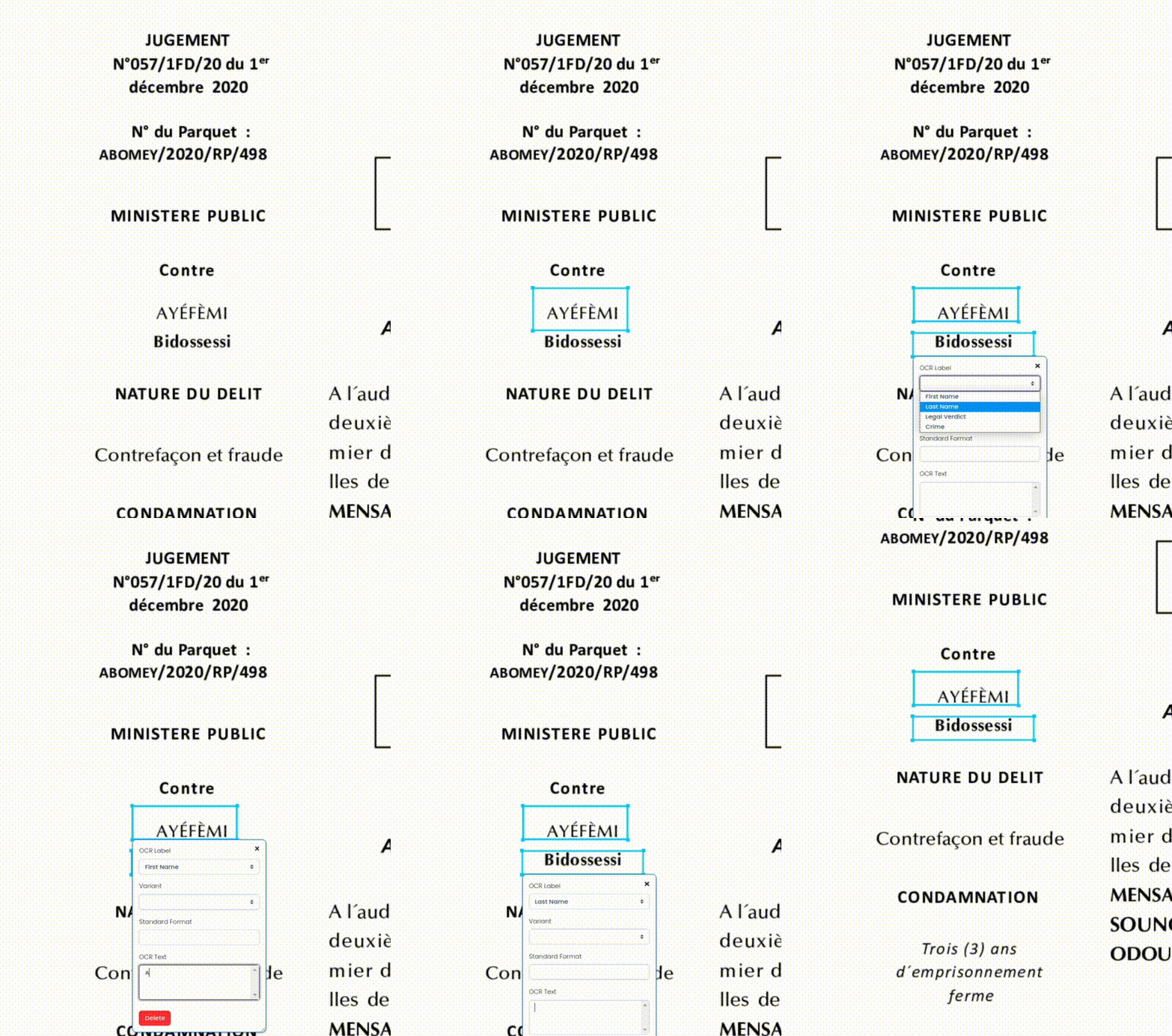
The annotator used direct manipulation (polygon drawing) to make training actions feel familiar and low-friction.
Outcome
In a three-month collaboration with developers, we transformed abstract machine learning processes into a structured and operable product.
The result was a clear AI workflow instead of a black box, reduced cognitive overload, and a minimal interface capable of handling complex backend logic. Even as a short project, it demonstrated how thoughtful structure and interaction design can make advanced systems usable and trustworthy.